Thứ Hai, 8 tháng 4, 2013

Death & Dying Cases Before the Minnesota Supreme Court - Part II

On Monday, May 13, the Minnesota Supreme Court will hear oral arguments in State v. Melchert-Dinkel. 


The issue is whether Minnesota Statutes section 609.215, subdivision 1, which criminalizes advising, encouraging, or assisting another to commit suicide, is unconstitutionally overbroad under the First Amendment.  


In July 2012, the Court of Appeals held that the First Amendment does not bar the state from prosecuting a person for advising, encouraging, or assisting another to commit suicide by sending coercive messages to suicide-contemplating Internet users instructing them how to kill themselves and coaxing them to do so.


Death & Dying Cases Before the Minnesota Supreme Court - Part I


This Wednesday, the Minnesota Supreme Court will hear oral arguments in State v. Smith.  A video of the arguments will be available here.  Here is a summary of the issues.


Eddie Smith was driving a car at a speed of more than 50 miles per hour in a residential neighborhood when he hit another car in which 93-year-old Edith Schouveller was a passenger.  Smith had an alcohol concentration of .11 shortly after the accident. 


Schouveller’s spinal cord was fractured during the accident.  She spent 13 days in the hospital and was then transferred to a nursing home and rehabilitation care center.  After two days at the nursing home, she was admitted to the hospital and diagnosed with pneumonia.  Several days later, doctors determined that Schouveller required intubation.  Schouveller, however, had executed a living will with a do-not-resuscitate order specifying that she not be intubated.  Doctors did not intubate Schouveller, and she died later that evening.


After a jury trial, Smith was convicted, in part, of criminal vehicular homicide.  The court of appeals affirmed Smith’s conviction.


On appeal to the supreme court, Smith raises the following issues in his brief:  (1)  whether the State failed to prove that Smith caused the death of Schouveller; (2) whether Schouveller’s do-not-resuscitate order was a superseding cause of Schouveller’s death; and (3) whether Smith is entitled to a new trial because the district court failed to instruct the jury on the effect of a finding that something was a superseding cause of Schouveller’s death.  


Chủ Nhật, 7 tháng 4, 2013

Scary Frequent Violations of Patient Rights

Annette M. Browning's article in the March 2013 American Journal of Critical Care is about moral distress among critical care nurses.  But just look at this table summarizing the sources of this distress:  e.g. deception, inadequate consent.  These things happen with alarming frequency.


Thứ Bảy, 6 tháng 4, 2013

Hospital Promises to "Cheat Death"


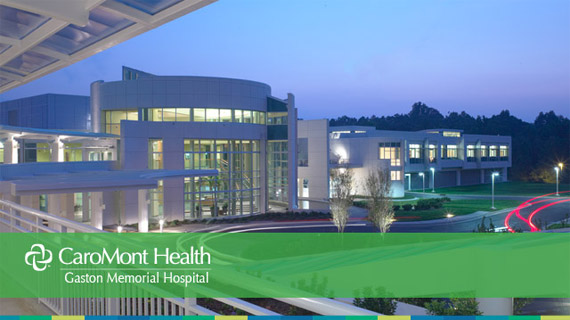
On Friday, North Carolina's CaroMont Health unveiled a new campaign "To Give Every Man, Woman and Child In Gaston County Every Opportunity To Cheat Death."  The announcement ended with this toast: "May you never lie, steal or cheat.  But if you must lie, lie with the one you love. If you must steal, steal kisses.  If you must cheat, cheat death."


I have blogged before (e.g. here)
about hospitals that promise miracles.  Such
representations, even more than the inaccurately-high CPR success rate
portrayed on broadcast shows, lead families to have unrealistically high
expectations. It is hard to recommend palliative, rather than curative care,
after one has already promised a miracle. And surrogate belief in miracles
continues to be one of the most significant causes of intractable futility
disputes.


But to be fair, CaroMont Health's tag line is focused more on its efforts to promote public health than on its hospital care.  "We are not saying we can stop death.  What we are saying is that if you take an active part in your own health—being more active, making better nutritional choices, stop smoking—you can live a longer, healthier and ultimately happier life."  This is not just appropriate but commendable. Nevertheless, this could be misunderstood by hospital and ICU patients as applying to them.


Thứ Sáu, 5 tháng 4, 2013

Transfer Resolves Medical Futility Case for Kesell Macias

A few days ago, I blogged that Scripps Mercy planned to stop life-Kesell Macias' life-sustaining treatment over the objections of his family.  Apparently, the hospital changed course.  It agreed to provide the family with a second opinion.  Now, Macias has been transferred to UC Irvine Medical Center.  


The California Probate Code section that permits a health care provider to "decline to comply with an individual health care instruction or health care decision" also requires the provider to "make all reasonable efforts to assist in the transfer of the patient to


another health care provider or institution that is willing to comply

with the instruction or decision."  Normally, such transfers are not found.  But when they are, everyone gets what they want.  Except maybe the patient.


Mindful Practice - Focus on Serious & Life-Limiting Illness


This looks like a valuable workshop in New York from May 1 to 4, with faculty Ron Epstein, Tony Back, Tim Quill, and Peter Sullivan.


Summary


With the aging of the baby boom generation, health care reform and advances in medical technology, clinicians face increasingly complex and difficult situations involving care of patients with serious and life-limiting illnesses. These illnesses, including but not limited to metastatic cancer, neurodegenerative diseases, heart failure and multi-organ failure, present both biomedical and personal challenges to the clinicians who provide such care. Yet, in their clinical training, those who provide this care receive little education and support to develop the attentiveness, skills and personal resilience required to approach this work with compassion and presence, and to prevent burnout. These challenges are amplified by the increasing pace, complexity, regulatory requirements and financial challenges of medical practice.


Workshop Goals and Objectives


This workshop is designed to improve the quality of care that clinicians provide while improving their own resilience and well-being. This program will develop participants’ capacity for mindfulness in clinical practice and education – attentiveness, situation awareness, self-awareness, teamwork and self-monitoring in stressful and demanding situations – with the intention of providing better care to patients and to take better care of ourselves. Themes of the workshop sessions will include difficult discussions with patients and families, witnessing and responding to suffering, symptom management, difficult decisions, uncertainty, end-of-life care, ethical dilemmas, working in teams, self-care and compassion. Sessions incorporate interactive presentations, formal and informal mindfulness practice, narrative and appreciative dialogue exercises, and discussion.


Intended Audience


For medical practitioners (physicians, NPs, PAs) and educators who work in Intensive/Critical Care, Hospital Medicine, Oncology, Primary Care, Palliative Care, Hospice and other settings in which clinicians face serious illness and mortality.


Thứ Năm, 4 tháng 4, 2013

6th International Symposium on Brain Death and Disorders of Consciousness

The 6th International Symposium on Brain Death and Disorders of Consciousness will be held, in Havana, Cuba, on December 3-6, 2013.  There are two main themes:


BRAIN DEATH


  • Conceptual approach to human death

  • BD criteria in different countries

  • Ancillary tests in BD

  • Autonomic nervous system assessment in BD

  • BD in childhood

  • Anencephalic infants

  • End-of-life dilemmas: terminal patient, euthanasia, assisted suicide, etc.

  • Legal considerations surrounding BD and related states

  • Philosophical, theological, sociological, historical and cultural considerations of human death

  • Organ transplantation


DISORDERS OF CONSCIOUSNESS


  • Pathophysiological mechanisms of consciousness generation

  • Coma, persistent vegetative state (PVS), minimally conscious state (MCS), and other DOC

  • Clinical diagnosis of DOC

  • Neuroimaging techniques for assessing DOC

  • Neurophysiologic tests for assessing DOC

  • Autonomic nervous system assessment of DOC

  • Neurorehabilitation of DOC

  • Neuroprotection and Neuromonitoring of DOC

  • New trends in cardio-pulmonar-cerebral resuscitation