Thứ Sáu, 27 tháng 7, 2012
Hospital Stops Life Support after Nonpayment

Thứ Tư, 25 tháng 7, 2012
Outpatient Palliative Care
Here is another great story by Mercury News writer Lisa Krieger. She covers the now well-known benefits of palliative care, the reimbursement incentive obstacles to its much-needed expansion, and a great new "outpatient palliative care" program in the bay area.
Thứ Ba, 24 tháng 7, 2012
Futility Case at Stollery’s Children’s Hospital in Alberta

A 28-month-old child lies in a hospital on life
support, with brain injuries so severe that doctors believe she’ll never recover.
Her parents are charged with aggravated assault, criminal negligence
causing bodily harm, and failing to provide the necessities of life. They
refuse to discontinue life support for their daughter, citing their religious
beliefs.
The Edmonton Journal describes the dispute as a
"jurisdictional mess" — with no one, it seems, empowered to act in
the child’s best interests. “You would think for something like this
there would be clear jurisprudence, clear policy. But there just isn't, because
it implicates so many values,” says Tim Caulfield, a professor of law and
bioethics at the University of Alberta. “There is no clarity on exactly what is
futile care, and when health-care providers can make a unilateral decision to
discontinue life support.” Hopefully, a Supreme Court decision in Rasouli will provide some much-needed guidance.
Thứ Hai, 23 tháng 7, 2012
The Death(s) of Usher's Stepson Kile Glover
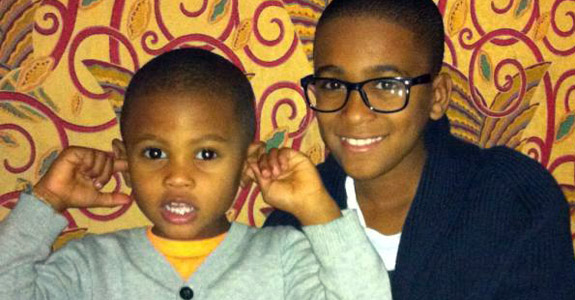
The confusion between brain death and death is probably not going to dissipate anytime soon. For example, multiple national media are reporting the "passing away" of Usher's 11-year-old stepson Kile Glover "after being taken off life support." But they also note that Kile already "was pronounced dead over a week ago after being involved in a jet-ski accident."
Worse, matters seem to have been further confused by neurologist Dr. Brent Masel, national director of the Brain Injury Association of America and medical director of the Transitional Learning Center of Galveston, Texas. Dr. Masel stated: "When someone is declared brain dead, it's not that their brain is not functioning at all." "There are two components to the brain, the cerebrum, which is the thinking part and the brain stem, which narrows and becomes the spinal cord." The stem is the automatic part, which controls respiration and heart rate and someone can technically live without a functioning cerebrum, which is not unusual in such injuries. "The thinking part of the brain is no longer functioning and all the patient has functioning is the brain stem."
I hope that Dr. Masel was misquoted. Brain death is statutorily defined as the "irreversible cessation of all functions of the brain, including the brainstem."
Chủ Nhật, 22 tháng 7, 2012
Removing Your Own Ventilator is Not Suicide
The LA Times reports that Palm Springs, CA
police arrested Bill Bentinck earlier this month. He walked into the room
of his terminally ill wife. She had disconnected her oxygen supply.
Bentinck ased her if she was sure.
She was. He and his wife then held hands and professed their love
for each other. After a while, she stopped breathing. "It was a very
peaceful death," Bentinck said. "She didn't struggle at all. She just
went to sleep."
Bentinck then called
hospice a few hours later. Even though his wife apparently had a POLST,
he waited to ensure that there would be no resuscitation attempt. Hospice
called the coroner. And the coroner called the police. The police
arrested Bentinck. But he was later released.
California Probate Code 4653 (and other California law),
like the law in most states, is very clear that withholding or withdrawing
healthcare – even life-sustaining healthcare – does not constitute “mercy
killing, assisted suicide, or euthanasia.”
Thứ Sáu, 20 tháng 7, 2012
Public Health Perspective on End of Life Care
There is an urgent need for public health
to adopt dying and palliative care as a major public health priority, for
instance in national health strategies, and for palliative care to adopt a
public health perspective to improve circumstances of dying at a population
level.
 Worldwide, more than 50 million people die each year
and it is estimated on the basis of the conditions leading to death that up to
60% of them could benefit from some form of palliative care. It is a public health challenge to ensure that
these people can access good palliative or end-of-life care. Pursuing good population health essentially
also implies striving for a 'good enough death' and a good quality of care at
the end of life. Safeguarding a good
quality of the end of life for patient populations for whom it is appropriate
requires a public health approach.
In
most developed countries ageing populations that increasingly die from chronic
diseases after a prolonged -often degenerative- dying trajectory make up the
public health challenges for palliative care. The very large baby boom
generation will soon reach old age and can be expected to pose strong demands
regarding the circumstances and care at their end of life. Only by applying a
public health approach to palliative care (instead of individual patient
perspectives), can societies successfully help to organize and plan end-of-life
care in accordance with these aspirations.
A
Public Health Perspective on End of Life Care (Oxford University Press) presents a synthesis and
overview of relevant research and empirical data on the end of life that can
bear a basis for a more systematic 'public health of the end of life'. The book
focuses on population health, rather than clinical interventions or other
aspects of individual health, and discusses studies using different
methodologies (not only epidemiological research). The focus is on the quality
of the end-of-life of populations, in particular from social sciences,
environmental sciences, and humanities perspectives.
PART I:
INTRODUCTION
1: J Cohen & L
Deliens: Applying a public health perspective in end-of-life care
PART II: CLINICAL AND SOCIAL CONTEXT OF
DEATH AND DYING
2: ST Tang &
C-H Chen: Place of death and end-of-life care
3: I Higginson:
Circumstances of death and dying
4: A Van der Heide
& J Rietjens: End-of-life decisions
5: K Fassbender:
Economic and health related consequences of individuals caring for terminally
ill cancer patients in Canada
PART III: END-OF-LIFE CARE: PROVISION,
ACCESS, AND CHARACTERISTICS
6: Wentlandt K
& C Zimmerman: Aggressive treatment and palliative care at the end of life
7: G Grande:
Access to palliative care
8: L Emanuel:
Communication between patient and caregiver
PART IV: END-OF-LIFE CARE SETTINGS
9: L Van den
Block: Palliative care in primary care
10: JT Van der
Steen, MR Helton, PD Sloane & MW Ribbe: Palliative care in institutional
long-term care settings
11: AS Kelley, DJ
Fischberg & RS Morrison: Palliative care in hospitals
PART V: INEQUALITIES AT THE END OF LIFE:
UNDERSERVED GROUPS
12: J
Addington-Hall & K Hunt: Non-cancer patients
13: K Brazil:
Palliative care for the older adult
14: K Hexem &
K Feudtner: A public health framework for pediatric palliative and hospice care
15: I
Tuffrey-Wijne, A Wagemans & L Curfs: End-of-life care for patients with
intellectual disabilities
16: D Wilson &
D Mohankumar: End-of-life care for people who live in rural or remote areas
versus those who live in urban areas
17: J Koffman:
Social inequalities at the end of life
PART VI: END-OF-LIFE CARE POLICIES
18: X
Gómez-Batiste, J Espinosa, MP Gonzalez Olmedo, M Martínez-Muñoz, C Lasmarias, A
Novellas, E Beas, J Porta, J Trelis, C Calle & J Stjernsward: Design,
implementation, and evaluation of palliative care programs and services with a
public health who perspective
19: J Downing
& R Harding: Public health policy regarding end-of-life care in sub-Saharan
Africa
20: D Clark:
Palliative care in the global context: understanding policies to support
end-of-life care
21: A Kellehear:
The importance of family carers in end-of-life care: a public health approach
PART VII: Conclusion
22: L Deliens
& J Cohen: Conclusions
Đăng ký:
Bài đăng (Atom)


